
 Commercial


For a few years I’ve been hearing people say that the next big trend in residential hardware will be the satin brass finish. The ubiquitous shiny brass finish fell out of favor years ago, largely replaced by satin nickel and aged bronze. Lately I’ve been seeing some new construction outfitted with shiny chrome door hardware. But just last month I noticed for the first time some satin brass offerings from Schlage on the shelves of the big box hardware stores. And I installed some last week. Along with this hardware they’re supplying the darker screws and latch plates that come with antique brass hardware, which is an interesting choice. I wonder if this will take off.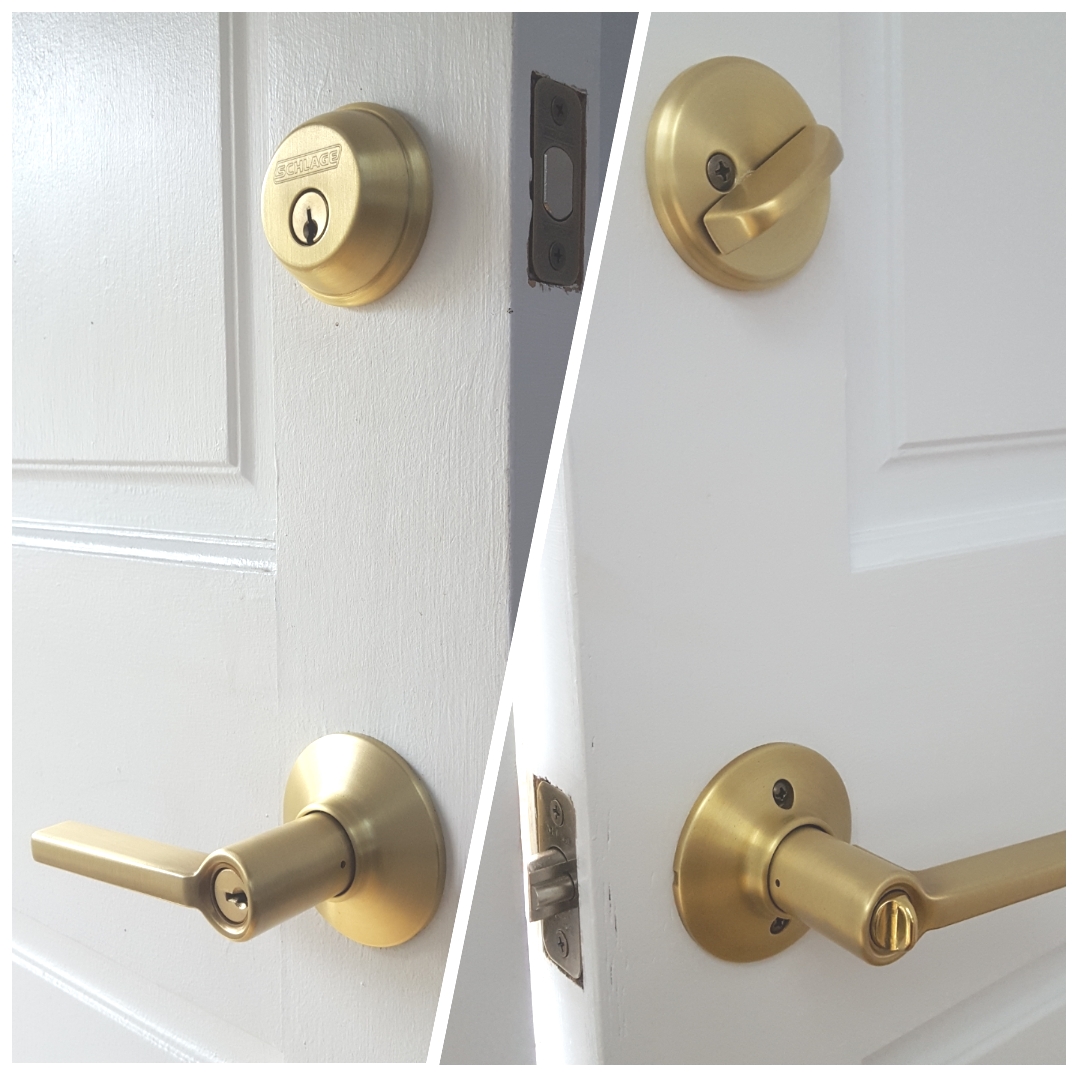
Author: admin
A Brief Note on Backset
Backset is a term related to the way a door i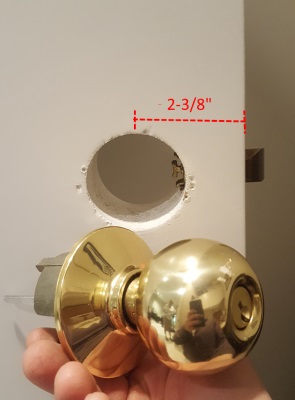 s prepped for lock installation. It refers to the distance between the edge of the door and the center of the door hardware. Most residential doors have a backset of 2-3/8” and most commercial doors use a slightly longer backset of 2-3/4”. These are not hardfast rules. Though some hardware is adjustable for either backset, it’s not always the case and sometimes you need to consider backset when ordering new locks.
Back in the ‘60s and early ‘70s they thought it was cute to install locks with a 5” backset. Nowadays that creates a bit of a problem when the 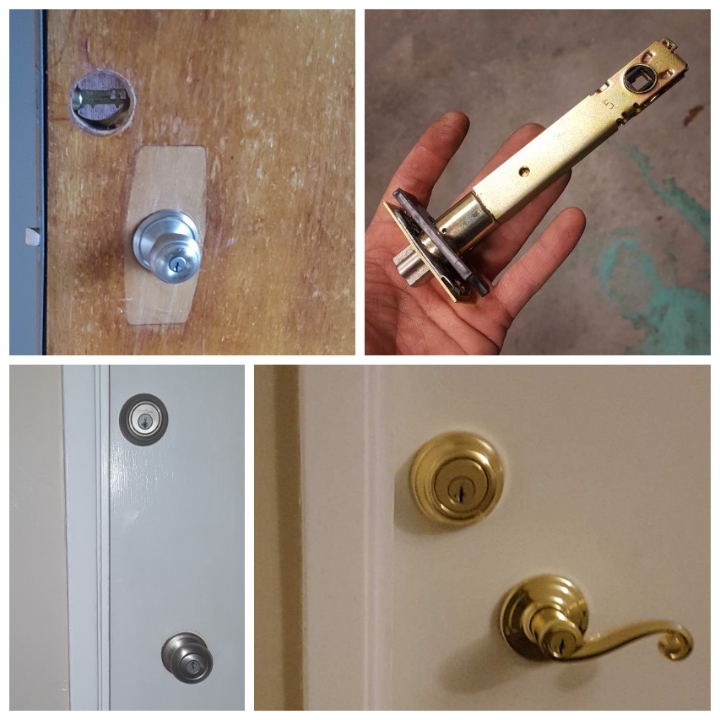 locks fail because you can’t just walk into Home Depot and buy a lock made for one of these oddly prepped doors from the 1960s. In those days, houses were rarely secured with anything more than locking doorknobs, so it also presents an issue when you want to add a deadbolt to the door. You have to decide whether to install a deadbolt that’s out of alignment with the knob, or to find one with an extended latchbolt. If you take the latter route it will always be a hassle to service or replace the lock. I usually advocate for the offset.
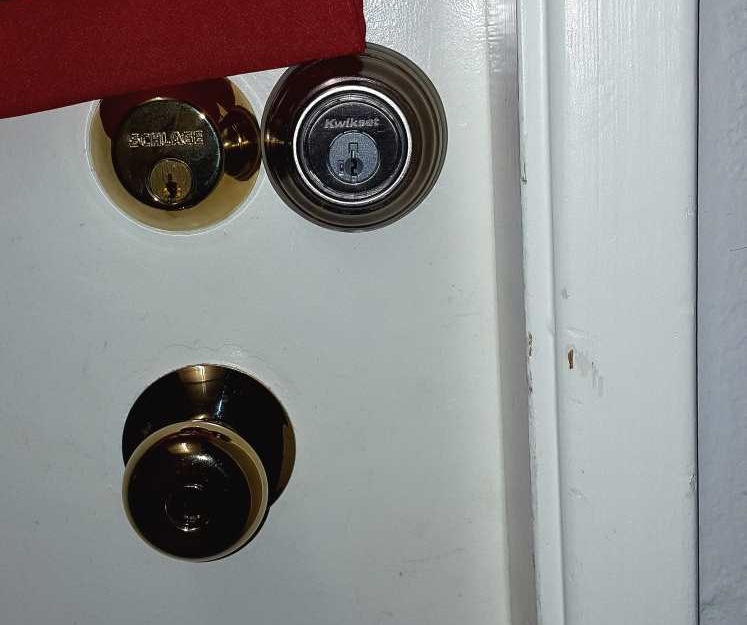
Here’s a case where someone decided to give up on looking for the specialty hardware. Instead he just installed a new deadbolt with a standard backset right next to the lock with the longer backset.
Waterlogged Contractor Box
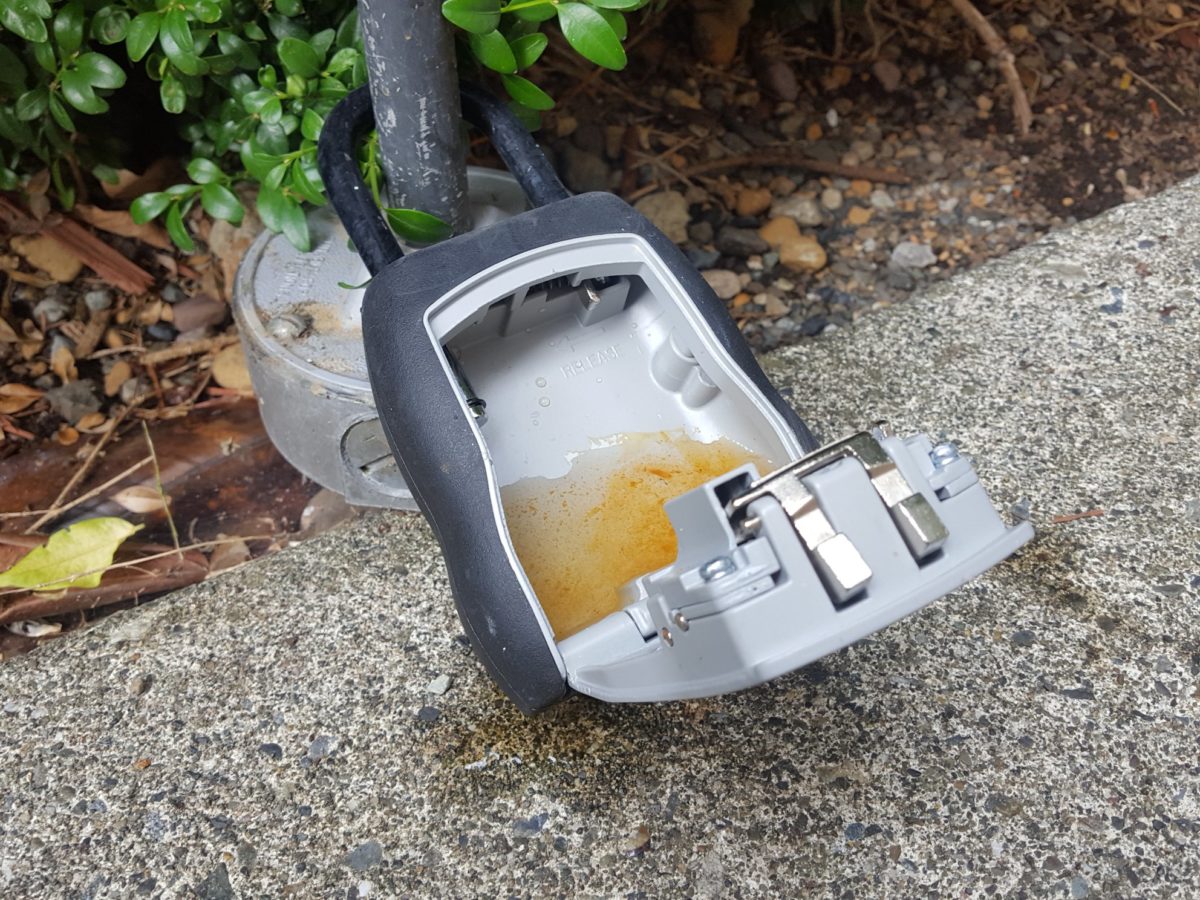
How many times do you suppose you can take a key that’s dripping with rusty water and put it into your lock before that lock starts presenting problems?
Hardware Tip
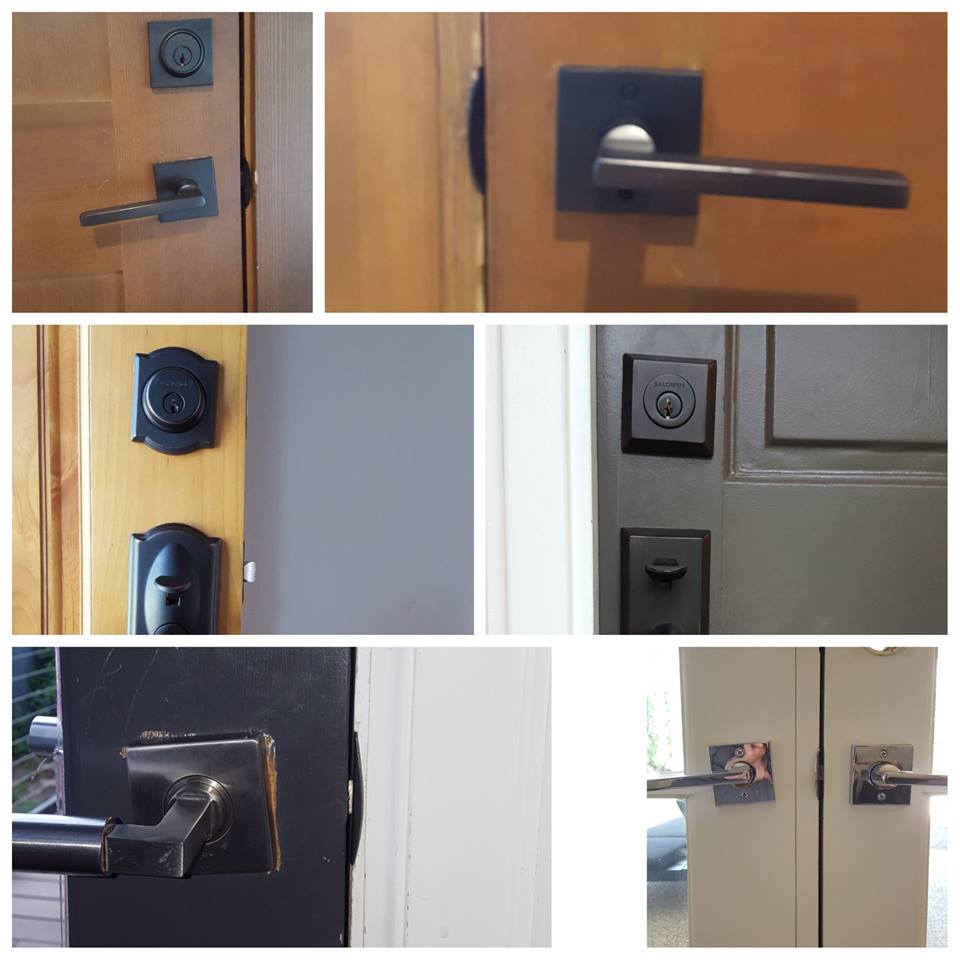
If you’re buying new door hardware for your house, I recommend avoiding options that have rectangular escutcheons. They look really sharp in the showroom but look kind of sloppy at home. Door hardware tends to rotate a bit as you use it. If your hardware has straight sides and is right next to something long and level (like, say, the edge of a door) it’s fairly conspicuous when it’s askew, even by just one or two degrees.
Neighbor Lady
I’m aware that in the course of my work I can make folks a little uneasy. My cargo van is dingy and unmarked, and looks out of place in most of the neighborhoods I drive it through. My hands are generally dirty and I often have a drill hooked to my belt. People see me and they get the feeling I might not belong there, not least if I’m picking the lock on a mailbox or looking for an open window. People eye me with suspicion as I drive down their streets. I do my best to defuse those concerns with a smile or a friendly wave, and it’s surprising how quickly the wariness drops from their faces when I do.
At the same time, I try to do my work with a certain amount of discretion and I’m always considerate of my customers’ privacy. My customers don’t necessarily want it advertised that they goofed up and locked themselves out, or that they’re preparing to rent out their space in violation of HOA rules, or that they have to evict a member of the family. It isn’t my place to say what anyone else knows about their doings. Sometimes, though, I’m put in a position where I have to decide whether it’s more important that I respect a customer’s privacy or that I allay a neighbor’s suspicions. My rule of thumb is that I should try to offer just enough information to quell people’s legitimate concerns about what I might be up to, but I never feel compelled to satisfy a neighbor’s idle curiosity at the expense of my customer’s privacy.
Yesterday I had to make this type of judgment call when I went to change the lock on the front door of an upscale waterfront condo in Kirkland. After I got into the building using the entry code given to me by the property manager, I went up to the third floor, retrieved the key from the contractor box hanging from the door, and went in. The apartment was capacious, with high ceilings, fine millwork, and a magnificent view of Lake Washington. As I got to work taking the complicated lock off the door, I saw the elderly woman across the hall poke her head out of her front door and eye me nervously. “Just changing locks between tenancies,” I said. I didn’t think I was telling her anything she wouldn’t have known or been able to figure out just from living where she did and observing me. We exchanged some pleasantries and she went back into her apartment.
Shortly after that I had to go out to my van for my toolbox. As I was walking out the front door, I passed another elderly resident of the building. She wore an expensive cardigan and her hair was elegantly coiffed. “What are you doing here?” she asked me with an air of authority. I smiled at her but didn’t slow my pace or offer anything in the way of an answer. When I came back from my van, she was lingering at the door. I used the keypad again to enter and she followed me into the elevator. She asked me again what I was doing and I lifted the tools in my hand as I said, “I’m working.” “What are you doing? And in which unit?” Her tone smacked of privilege. I looked her squarely in the face and said, “Ma’am, it’s not really any of your business.” “Yes it is my business,” she said. “I live in this building!” “No ma’am, you’re just being nosy,” I told her. “Well, if you won’t explain yourself then I’m going to call the police!” she said. This was escalating quickly. “I invite you to do so,” I told her with a nod of my head. For a moment she was flustered, her bluff having been called. She seemed unaccustomed to not being acknowledged.
The elevator bell dinged and the door opened onto the third floor. Enraged and indignant, the woman followed me out of the elevator and to the door of the unit on which I was working. I took the key out of my pocket and unlocked the door. The woman tried to follow me into the apartment. Not wanting to let a stranger into an apartment that was not mine, I said, “Ma’am, you can’t come in here,” and I quickly closed the door most of the way to block her from entering. She put both of her palms on the door and tried to force her way in. Now, I’m a little guy—5’6” tall and 125 pounds with my hair wet—but I’m still an adult man. There’s little chance of me losing the door-pushing game to an old lady. I planted my foot in front of the door so it wouldn’t open more than about six inches. Through the gap she called, “Gerald! Gerald!” I looked down the apartment’s spacious empty corridor as the echo of her reedy voice bounced around the walls, and was struck by the weirdness of what was happening. “This is a vacant unit,” I told her. Leaving my foot where it was, I crouched down and got to work at taking the lock off the door so I could rekey it. All the while she was feebly trying to push the door open. Again she insisted that I tell her what I was doing. If she’d simply stopped and looked at me, she would have figured it out pretty quickly, but she was more interested in being validated than getting answers. I won’t swear this really happened, but in my memory she said, “I have a right to know what you’re doing. I live in this building!” as she balled up her fists and stomped her foot.
The woman from across the hall heard the commotion and came out. “I don’t know why this guy is being so obnoxious! He won’t tell me what he’s doing!” They discussed the situation and I tried to keep my cool as I worked on the lock, but the stress of the situation made me a little clumsy and slowed me down. I also replied a few times to the angry woman’s rebukes. I never raised my voice but I’m sure I let my annoyance show. When I had the lock off the door and was ready to bring it to my van for rekeying, I wasn’t sure what I should do. I stood up and said, “Now I have to go back to my van for a few minutes. You MAY NOT go in there while I’m gone.” She looked surprised and insisted that she wouldn’t go into an apartment that wasn’t hers. I was comforted that the other neighbor was there.
When I got back, the hallway was empty. I reassembled the freshly rekeyed lock, secured the apartment, and deposited the new keys into the contractor box. Then I knocked on the neighbor’s door so I could apologize to her. She shouldn’t have been dragged into that mess, I told her. She was sweet as she expressed her sympathy and wished me a better day moving forward. I didn’t see the other woman on my way out of the building.
This episode was peculiar because I’m always thinking that neighbors should be more vigilant. Attentive neighbors are one of the best lines of defense against burglaries. I sometimes shake my head in disbelief when I see the noisy and destructive ways that burglars have broken into homes in tightly populated neighborhoods, and learn that no neighbors approached them or called the police. This lady in the cardigan was being vigilant. She was also being rude, nosy, and entitled. But I imagine that somewhere underneath all that she was concerned for her and her neighbors’ security, and we should all want that from the old ladies who live nearby. I would have preferred that she be polite to me, though.
Strike Plates
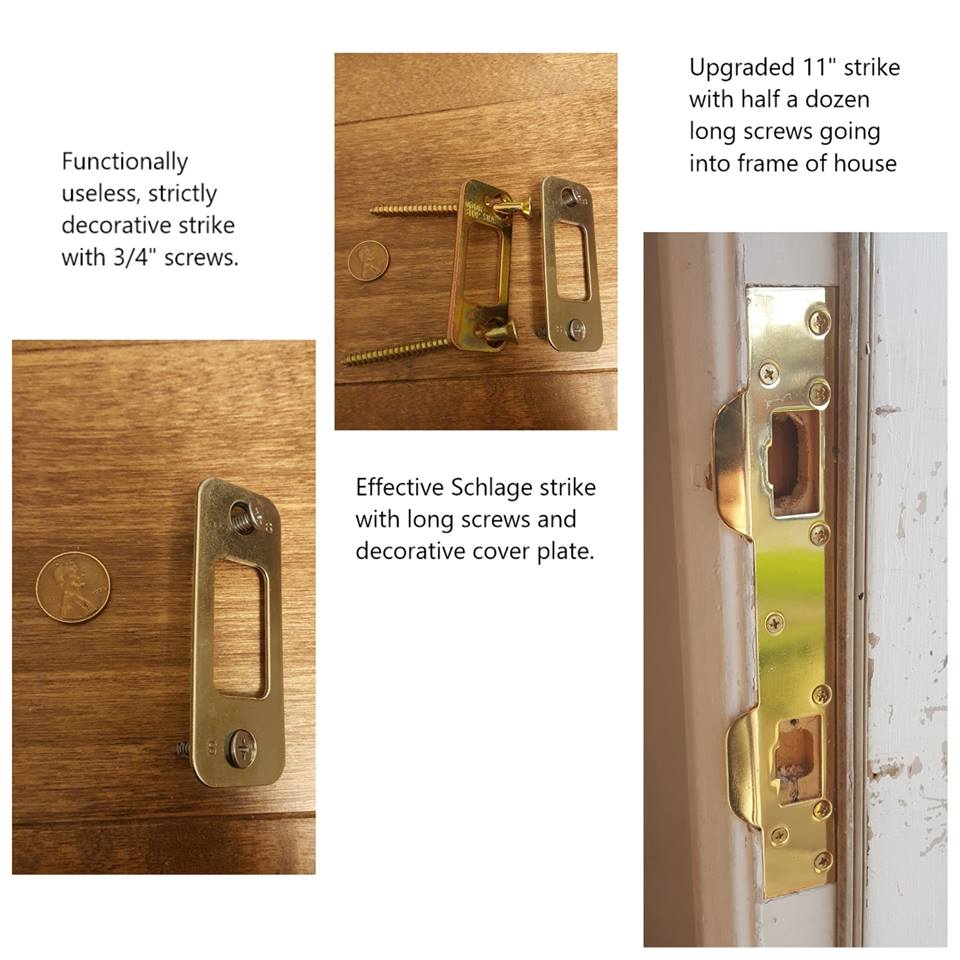
If you’ve ever done any research on what kind of deadbolt to buy, you’ve probably read that whatever you choose, it’s important to have a strike plate that’s affixed to the jamb with long screws that sink into the frame of the house. This is to stop the door from being easily kicked in. When Consumer Reports tested the strike plates of a number of different brands, they found that Schlage’s fared pretty well against repeated attacks. I like these strikes because they’re beefy and yet they’re completely concealed by the decorative plate that also comes with the Schlage deadbolts. Generally, I think they’re sufficient.
When customers are particularly concerned about door kick-ins, I like to install the 11” plates sold under various brand names like Entry Armor, Defiant, and Gatehouse. You can get them at the big box stores for around $10. They have six long screws that go deep into the studs and they’re reasonably attractive, coming in a few different finishes. They’re also good for covering up mistakes from prior installations.
I’m aware of some products out there that run the whole length of the door frame. They have names like StrikeMaster II Pro and Door Security Pro XL. They’re not particularly pretty and I suspect they’re primarily purchased by people who hope to be able to buy time to flush large quantities of drugs down the toilet when the police are at their door with a battering ram. I think they’re overkill, especially if you don’t have bars on your windows. What’s the point of having an impenetrable door if six feet away there’s a very easy point of entry?
If you’ve never done it before, go around your house and look at the strike plates on your door frames. If some lazy contractor only installed them with ¾” screws, you might want to spend a bit of time this weekend making them a little more secure.
Replacing an Old Schlage Interconnected Lock
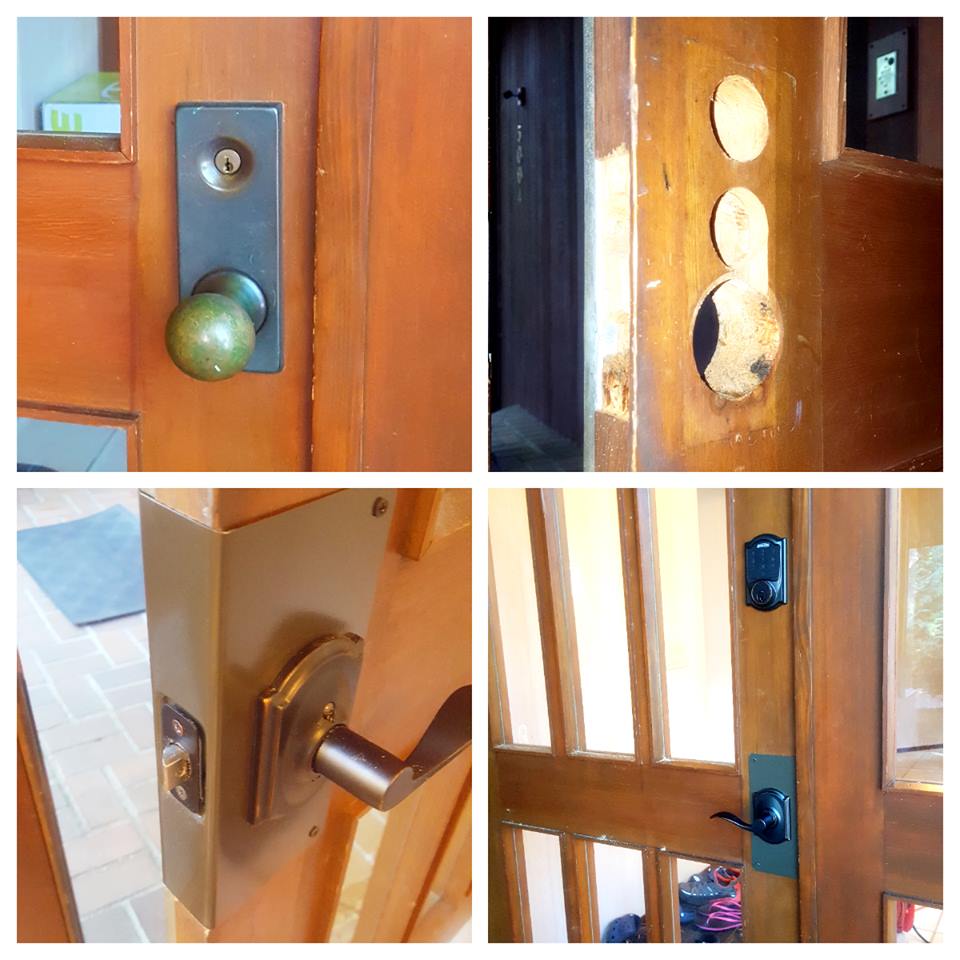
These old Schlage interconnected locks are reaching an age where they’re starting to have reliability issues. Sometimes customers just want to dump them for something with a keypad.
It’s not simple. They have this funky door prep, which is unique to these locks. As far as I know, there’s no modern lock that can be installed in these holes. My approach is to use my jig to bore standard holes over the existing ones and then cover up all the old mess with a security wrap. This works for replacing mortise locks as well.
The door in the photos is slightly thinner than standard, so the wrap doesn’t fit as snugly as it normally would.
A Most Interesting Call
Today a Mexican woman called me to ask if I could help her remove a gold ring that was stuck on her finger. Immediately my mind started racing to come up with a solution for her. Ultimately I realized that before proceeding with any of my very dangerous ideas, I’d need to write up an airtight hold-harmless agreement—in Spanish—for her to sign. I told her that I mostly focus on residential stuff and then sent her the phone number of a Spanish-speaking jeweler a few blocks from her home. I really want to call her back to find out what happened.
Polycarbonate Sheeting for Window Security
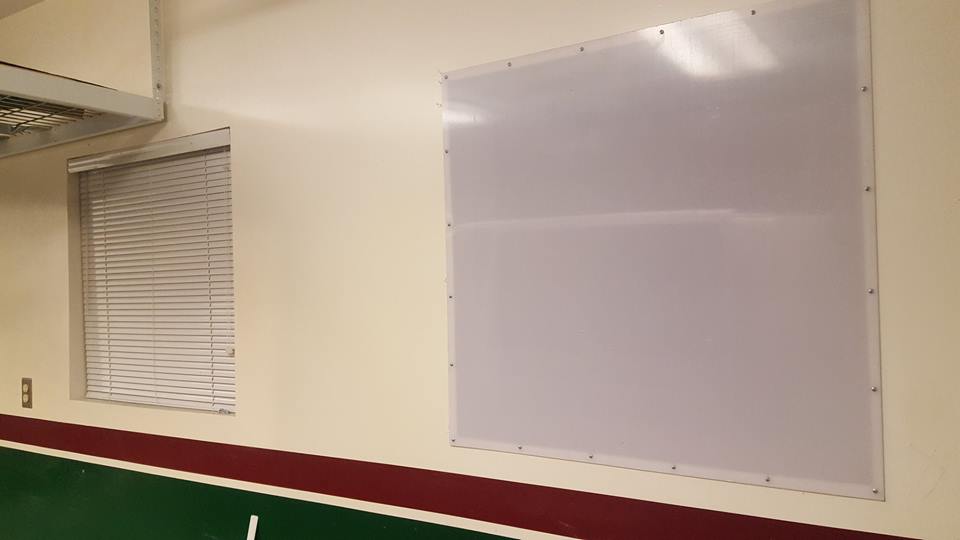
Sometimes when customers express concern about having a window right next to a deadbolt, I tell them they can screw some polycarbonate sheeting over the window. Polycarbonate is clear, flexible, and very hard to break. It’s sometimes known as Lexan. You can go on YouTube and find videos of burly men trying unsuccessfully to shatter it with an assortment of hammers. It makes a huge racket but remains intact.
Here’s one: https://www.youtube.com/watch?v=YJ8G0XqLpeA
I covered the windows in my garage with the stuff. I chose to leave on the white protective film to prevent people from peering in but still allow a bit of natural light to shine through. The film peels right off. If the Lexan is intended for a door or window that needs to be a little more attractive, it’s certainly possible to use smaller screws, or even ones with little decorative covers. In most cases its purpose would be to prevent an easy reach-in, so it doesn’t necessarily need to be affixed with so many screws that it looks like part of an aircraft.
I got this 1/8” sheeting at TAP Plastics in Seattle. The material is not cheap, but they sell it for quite a bit less than any vendors I found on the major online marketplaces. TAP even cut it down to size for me. Some of these products tend to yellow and turn brittle when exposed to constant sunlight, but TAP’s product is UV-stabilized and supposedly doesn’t do that. Still, it does lose integrity over time and after 20 years it might be worth replacing it. And one thing you have to watch out for is scratching. Though breaking it is a real challenge, scuffing it is easy.
This is one more useful tool to consider employing as part of your overall home security strategy.
The Case Against Samsung‘s Smart Mortise Locks
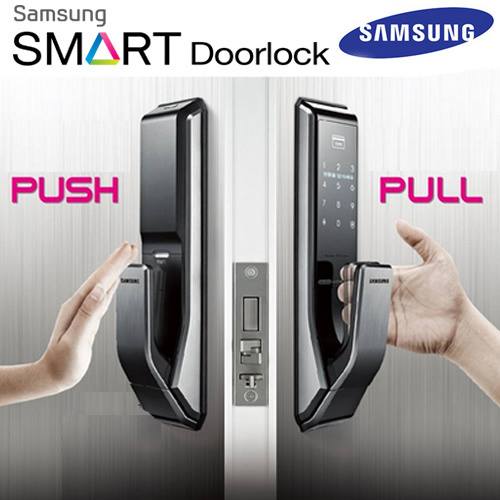
Sometimes I’m called upon to install Samsung mortise locks that customers have purchased from Amazon. These are not my favorite locks to install and I would not install one in my own home.
Samsung offers a variety of sleek digital locks with lots of cool features, including keypad entry, RFID key fob entry, and fingerprint recognition. These locks look like they were designed for the set of Star Trek: The Next Generation. They’re like a 20th-century conception of a futuristic lock. And they usually work. As far as I can tell, none of them have the capability of wirelessly linking into a smart home system. I’m sure that’s coming.
My biggest qualm is that they require a nonstandard door preparation. If you don’t already have a Samsung mortise lock in your door, installing one will require some significant door modification. Regardless of what kind of lock you currently have, it will be necessary to put new holes in your door. If you currently have a standard mortise lock (made by Baldwin, Sargent, Corbin Russwin, etc.), you will also likely have to fill in some of the spaces that are already in the door to assure a snug fit. I suppose this would all be fine if you expected this lock to last for 100 years like those other ones would. But this is a piece of electronics you’d be mounting to your door. Just like with your laptop and your smart phone, it’s likely that in a few years you’d want a new model. Would you then have to stick to the Samsung line because that’s what your door is prepped for? Are you confident you’d still want this brand in a few years? Will Samsung still be selling locks by that time that require this same door prep? Unless you’re pretty comfortable with the idea of replacing your whole door with the next lock change, this should heavily influence your consideration of this line of locks.
I also doubt how focused on security the designers of these locks were. To their credit, these are mortise locks, which are typically more secure than the standard cylindrical locks we find on most doors. The backup key holes are located in a part of the lock that would make them hard to pick. Additionally, they cannot be bumped and the keys themselves are relatively hard to duplicate (which is not always a great thing). Finding someone to rekey the locks would be a particularly interesting challenge. The strikeplates for these locks are lightweight and come with very short screws. It’s certainly possible to install a heftier strikeplate and to secure it to the frame of the house using long screws. But the fact that this isn’t included with the lock makes me think that withstanding a brute-force attack is not the main purpose of these locks. And as far as I can tell, none of these locks have been scored by the American National Standards Institute (ANSI), which is the principal authority for rating locks.
Although Samsung’s locks are packed with cool features and aesthetic appeal, the actual security they provide does not justify their high cost, the difficulty of installation, and the problems you encounter when you want to replace them.